New legislation, noteworthy transactions and news from the firms themselves. One email a week; unsubscribe from any issue.
Universidad de los Andes’ Fifth M&A Congress brings together leading Latin American corporate law practitioners · Latin Counsel
News · Corporate / M&A · Colombia
Universidad de los Andes’ Fifth M&A Congress brings together leading Latin American corporate law practitioners
Universidad de los Andes’ Fifth M&A Congress brought leading Latin American corporate law practitioners together in Colombia to discuss investment opportunities, regulatory changes and industry trends, with a particular focus on Venezuela, the new takeover bid regime and renewable energy.
Andrés Crump (Garrigues), Claudia Barrero (PPU), José Luis Suárez (Pérez-Llorca) and Jaime Moya (Cuatrecasas), from left to right, during the panel on Colombia’s new takeover bid regime at the University of los Andes’ 5th M&A Congress
Organized by Universidad de los Andes’ Mergers and Acquisitions Student Group, the Fifth Mergers and Acquisitions (M&A) Congress at Universidad de los Andes has become a forum for exchange among students, academics and corporate law practitioners.
The initiative began as a tribute to Andrés Hoyos Ramírez, a prominent transactional lawyer at Gómez-Pinzón, who died during the pandemic. It continues to promote collegiality, professional excellence and ethical reflection in M&A practice.
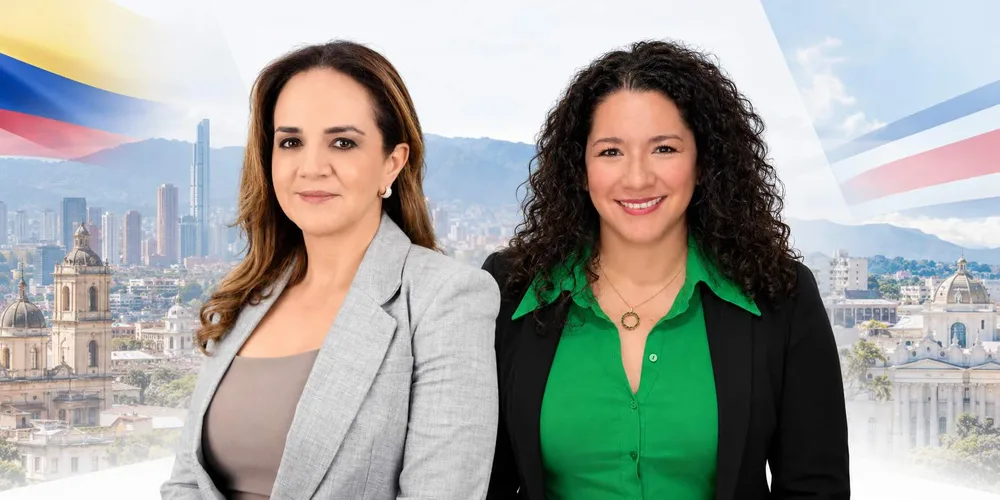
The opening session featured Mariana Camacho, manager of the student group; Jorge González, dean of Universidad de los Andes’ Faculty of Law; and organizing committee members Claudia Barrero and Natalia García, from PPU, and Jaime Cubillos, from Posse Herrera Ruiz.
The opening address was delivered by Alejandro Linares, former president of Colombia’s Constitutional Court, who discussed the continuing relevance of the principle of
, Andrés Bello’s legal influence and the skills that distinguish a good transactional lawyer.
Linares described M&A as a discipline that demands far more than technical knowledge: negotiation skills, commercial understanding, legal judgment and ethical responsibility. He also raised questions about the impact of artificial intelligence on legal practice.
One of the panels with the greatest regional interest was “Venezuela Roundtable: Current Developments, Challenges and Hot Markets”, moderated by Vivian Liberman, from BLP, with Fulvio Italiani, from D'Empaire; Pedro Ignacio Sosa, from Araque Reina; Joshua Williams, from Covington & Burling; and Jesús Villegas, from Baker McKenzie.
The discussion examined Venezuela’s investment environment following the events of January 3 and prospects for the recovery of strategic sectors.
Participants analyzed regulatory changes relating to hydrocarbons and mining, opportunities for private capital to participate, and contractual structures for developing investment projects.
Instruments discussed included production-sharing agreements, consortia and joint ventures, as well as the use of foreign law and international arbitration mechanisms to enhance legal certainty for transactions.
The discussion also highlighted the decisive role of the US sanctions regime and authorizations from the Office of Foreign Assets Control (OFAC).
The lawyers examined the use of general and specific licenses, the structuring of contracts subject to regulatory approvals, and the difficulties that financial institutions’ overcompliance can create.
On due diligence, they stressed the importance of investigating corporate history, employment and tax contingencies, corruption risks and ownership structures, particularly in transactions involving assets with a complex regulatory history.
Beyond the energy sector, participants identified potential opportunities in mining, consumer goods, agribusiness, pharmaceuticals and infrastructure, underscoring the importance of investment protection treaties and double taxation agreements.
The new takeover bid regime: boards take on a greater role
The second panel, on Colombia’s new takeover bid regime, featured Claudia Barrero, from Philippi Prietocarrizosa Ferrero DU & Uría (PPU); Jaime Moya, from Cuatrecasas; José Luis Suárez, from Pérez-Llorca; Andrés Crump, from Garrigues; and Santiago González, from Dentons Cárdenas & Cárdenas.
The discussion focused on the new regulatory framework’s implications for directors’ conduct, shareholder protection and the dynamics of acquiring listed companies.
A key theme was the shift from a model characterized by the target company’s passivity to one that gives its governing bodies a more active role.
The panelists examined the implications of requiring the board of directors to take an informed, technical position on an offer, as well as the scope to promote alternatives that maximize shareholder value.
The discussion also covered competing takeover bids and the actions directors may take while an offer is underway.
In this context, the panel considered tensions between fiduciary duties of loyalty and care, directors’ neutrality and the scope for business discretion recognized by the Business Judgment Rule.
Managing conflicts of interest was a central theme, particularly when the incentives of executives, majority shareholders and minority shareholders diverge.
The panel showed that the transformation of the takeover bid regime is not merely a procedural change; it raises fundamental questions about corporate governance, directors’ liability and the functioning of the market for corporate control.
M&A and renewable energy: storage, infrastructure and new investment structures
The third panel focused on the evolution of transactions in Latin America’s energy sector, with Felipe Aristizábal, from Martínez, Carla Ruggero, from Clifford Chance, Fernando Garrido, from Barros & Errázuriz, and Elizabeth Villa, from Isagen.
Participants discussed how the energy transition is changing both the profile of assets attractive to investors and the legal structures used to acquire and develop them.
Key trends included hybrid solar and wind generation portfolios combined with battery energy storage systems (BESS), transmission infrastructure and energy supply solutions for data centers.
The panel also examined the growing importance of strategic partnerships between local developers and major international operators.
Compared with traditional acquisitions of greenfield or brownfieldprojects, experts identified greater use of joint development agreements, purchase options, deferred payments and price adjustment mechanisms tied to the achievement of milestones.
Contractual risk allocation was another central issue, particularly in relation to Ready to Build (RTB) status, the commercial operation date (COD), warranties and earn-outmechanisms.
Panelists also discussed the obstacles that continue to constrain regional energy investment: transmission grid congestion, delays in environmental permits, regulatory uncertainty and challenges in engaging with local communities.
Stable rules and appropriate risk allocation among buyers, sellers and developers were identified as essential to facilitating new investment.
War stories: what complex negotiations teach us about M&A
The fourth panel, “War Stories and Other Demons”, offered a practical perspective on the challenges lawyers face in corporate negotiations.
Moderated by Juan Diego Martínez, from Serrano Martínez, the panel brought together Andrés Brown, from Pérez Bustamante & Ponce; Andrés Hidalgo, from Lloreda Camacho & Co.; and Roberta Gallardo, from Arias.
Drawing on their professional experience, participants reflected on the skills needed to manage transactions under commercial pressure, across cultural divides and in unexpected circumstances.
Strategic preparation and understanding the client’s business were identified as essential to effective negotiation.
The lawyers shared experiences involving geopolitical conflicts, regulatory obstacles and situations in which a client’s priorities unexpectedly changed the course of negotiations.
They also discussed differences among Latin American, US and Asian negotiating styles, as well as the challenges of combining civil law traditions with contract structures of Anglo-American origin.
The growing participation of women in M&A was another topic, alongside the importance of building diverse teams and strengthening communication and leadership skills.
Finally, the panel examined post-closing disputes, particularly arbitrations arising from representations and warranties, contractual obligations and non-compete agreements.
M&A careers: leadership, ethics and the future of the profession
The congress concluded with a conversation between Sergio Michelsen, from Brigard Urrutia, and Manuel Galicia, from Galicia Abogados, moderated by Jaime Cubillos, from Posse Herrera Ruiz.
Both lawyers looked back on their careers and shared experiences from some of the most significant corporate transactions in Latin America over recent decades.
Transactions discussed included SABMiller/Bavaria, Citibank’s acquisition of Banamex, transactions involving Liga MX and the Telefónica/Millicomtransaction.
Beyond the financial and legal aspects of these deals, the conversation focused on lawyer training, team building and the qualities that distinguish leaders in transactional practice.
Michelsen and Galicia stressed the need to cultivate intellectual curiosity, build professional relationships based on trust, delegate responsibilities and maintain high ethical standards.
The impact of artificial intelligence also featured prominently. Both agreed that automation will transform the performance of many legal tasks, particularly repetitive and document-based work.
However, they emphasized that professional judgment, the ability to understand clients’ commercial interests, negotiation and interpersonal trust will remain decisive in M&A transactions.
The closing session reinforced one of the congress’s recurring messages: technology can transform the corporate lawyer’s tools, but it cannot replace the judgment, ethics or human relationships that make a transaction possible.
With its fifth edition, Universidad de los Andes’ M&A Congress reaffirmed its commitment to connecting different generations of practitioners and fostering regional discussion of current and future challenges in corporate law.
Key facts
Regional gathering: Universidad de los Andes’ Fifth Mergers and Acquisitions Congress, organized by its M&A student group, brought together practitioners from international and Latin American firms, business representatives and academics
Origins of the congress: The initiative began as a tribute to transactional lawyer Andrés Hoyos Ramírez of Gómez-Pinzón
Venezuela: Participants examined potential investment opportunities, regulatory changes, OFAC sanctions and transaction structures with contractual and international protections
New takeover bid regime: The discussion focused on the role of boards, fiduciary duties, competing offers and conflicts of interest
Renewable energy: BESS storage, hybrid portfolios, electricity transmission and joint development agreements featured among regional trends
Complex negotiations: Strategic preparation, cultural differences, geopolitical risks and post-closing disputes were identified as recurring challenges
Leadership and artificial intelligence: Sergio Michelsen and Manuel Galicia highlighted the enduring value of professional judgment, ethics and trust as legal tasks become automated
%2C%20Claudia%20Barrero%20(PPU)%2C%20Jose%CC%81%20Luis%20Sua%CC%81rez%20(Pe%CC%81rez-Llorca)%20y%20Jaime%20Moya%20(Cuatrecasas)-1000x500.avif)